
Best Ergonomic Baby Carriers
A carrier that isn't truly ergonomic will wreck your lower back before your baby hits 20 pounds.
The difference between a good carrier and a bad one comes down to two things: whether baby’s hips sit in the natural “M” position with knees higher than the bottom, and whether the carrier actually distributes weight through your hips and shoulders instead of dumping it all on your lower spine. Cheap carriers fake the second part with thin straps and no lumbar panel, and you feel it after 20 minutes on your feet.
- Hip position isn't optional Look for the seat width to support baby’s thighs from knee to knee in an “M” shape. Narrow-seat carriers that let legs dangle straight down are a hip dysplasia risk, not just a comfort issue.
- Newborns need a specific fit, not just an insert A bunched-up infant insert stuffed into an adult-sized carrier isn’t the same as a carrier engineered for a 7-8 lb newborn’s head, neck, and spine. If you’re carrying from week one, buy for that stage specifically.
- Lumbar support separates the carriers that last from the ones you'll quit A padded, structured waist belt moves the load to your hips and pelvis instead of your shoulders and lower back. This is the single biggest factor in whether you’re still using the carrier at month six.
- Price tracks features, not safety Every carrier here meets hip-healthy standards even at $28. What extra money buys is breathability, adjustability range, and how comfortable it is on your body during hour-long wears, not whether it’s safe for baby.


Best Budget: Infantino Flip 4-in-1 Convertible Baby Carrier
Best budget 4-in-1 carrier
A convertible seat adjusts from narrow to wide, keeping baby’s legs in the ergonomic “M” position across 4 carry styles from 8-32 lbs.
- Lowest price point of any carrier on this list by a wide margin
- Seat adjusts narrow-to-wide for newborn through toddler hip positioning
- Four carry styles cover facing-in, facing-out, hip, and back carry
- Simple buckle system, easy to learn on the first try
- Thinner padding on straps and waist belt than pricier options
- No dedicated lumbar support panel, so long wears get uncomfortable faster
- Less breathable fabric than mesh carriers, warmer in summer
Best Overall: Ergobaby Omni Breeze
Best overall – breathable mesh comfort
SoftFlex mesh maximizes airflow to keep parent and baby cool, paired with lumbar support and 4 ergonomic carry positions from 7-45 lbs.
- SoftFlex mesh keeps both parent and baby noticeably cooler than standard cotton carriers
- Works from 7 lbs to 45 lbs without buying or attaching a separate infant insert
- Enhanced lumbar support panel makes multi-hour wears manageable
- All four carry positions available in one carrier, no swapping parts
- Highest everyday price on this list
- Mesh means less visual coverage than solid fabric if you want a more discreet look
- Bulkier folded-down profile than simpler budget carriers
Runner Up: Tula Free to Grow Carrier
Runner up – grows with baby, no insert needed
An adjustable seat expands from newborn to toddler without a separate infant insert, keeping baby in a proper ergonomic seated position from day one.
- Seat expands from newborn to toddler size without a separate insert to lose or wash
- Soft cotton construction feels less clinical than mesh-heavy alternatives
- Wide range of prints and colorways if you care about how it looks
- Padded, adjustable straps hold up well over long wear sessions
- Cotton fabric runs warmer than the Ergobaby’s mesh in hot climates
- Fewer carry positions than the LÍLLÉbaby or Ergobaby options
- Buckle adjustments take more fiddling to dial in than snap-adjust competitors
Best for Back Support: BabyBjörn Baby Carrier Harmony
Best for back support – 3D mesh comfort
A pressure-relieving waist belt and padded back support distribute baby’s weight evenly, easing strain on the wearer’s back and shoulders.
- Padded waist belt is designed specifically to relieve lower back pressure, not just look padded
- 3D mesh fabric breathes well and dries fast after spit-up or sweat
- Supports newborn, facing-in, outward-facing, and back carry positions
- Structured shoulder straps distribute weight evenly across both shoulders
- Second-most expensive carrier on this list
- Outward-facing position isn’t recommended for extended wear by many pediatric therapists, so use sparingly
- Bulkier waist belt can feel restrictive on smaller frames
Best for Versatility: LÍLLÉbaby Complete All Seasons
Best for versatility – 6 carry positions
Six ergonomic carry positions plus an extendable torso and adjustable side panels let this carrier adapt from newborn fetal hold to toddler back carry
- Six ergonomic carry positions, more than any other carrier on this list
- Zip-down front panel adds ventilation in summer, zips up for warmth in winter
- Extendable torso and adjustable side panels fit a wide range of body types
- Mid-range price gives premium features without the premium price tag
- More straps and panels mean a steeper learning curve than simpler buckle carriers
- Bulkier overall than minimalist wraps or the Ergobaby Embrace
- Six positions means more parts that can eventually wear out or need adjustment
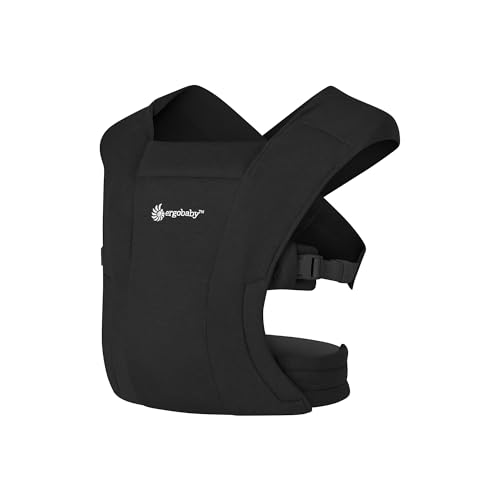
Best for Newborns: Ergobaby Embrace Newborn Baby Carrier
Best for newborns – hip-healthy positioning
A cozy knit bucket seat with head and neck support cradles newborns from 7 lbs, built around hip-healthy ergonomic positioning from day one.
- Cozy knit fabric feels like a wrap without the wrapping learning curve
- Built-in head and neck support designed for newborns from 7 lbs, not an add-on insert
- Hip-healthy “M” positioning from day one
- Lower profile and less bulk than full-size convertible carriers
- Tops out at 25 lbs and 12 months, so you’ll need a second carrier as baby grows
- Only two carry positions compared to four or six on other models
- Knit fabric runs warmer in direct sun than mesh options
Side-by-side comparison
|
Best Budget
Infantino Flip 4-in-1 Convertible Baby Carrier, Ad
|
Best Overall
Ergobaby All Carry Positions Breathable Mesh Baby
|
Runner Up
Free to Grow Carrier – Graphite
|
Best for Back Support
BabyBjörn Baby Carrier Harmony, Anthracite, 3D Mes
|
Best for Versatility
LÍLLÉbaby Complete All Seasons Ergonomic 6-in-1 Ba
|
Best for Newborns
Ergobaby Embrace Newborn Baby Carrier for Infants
|
|
|---|---|---|---|---|---|---|
|
|
|
|
|
|
|
|
| Weight Range | 8-32 lbs | 7-45 lbs | 7-45 lbs | 7-40 lbs | 7-45 lbs | 7-25 lbs |
| Carry Positions | 4 | 4 | 3-4 | 3 | 6 | 2 |
| No Infant Insert Needed | No | Yes | Yes | No | No | Yes |
| Dedicated Lumbar Support | No | Yes | No | Yes | Yes | No |
| Fabric | Standard woven | SoftFlex mesh | Cotton | 3D mesh | Cotton blend | Soft knit |
| Price | $29.15 | – | $179.00 | $229.66 | $74.99 | $99.00 |
| BUY NOW | BUY NOW | BUY NOW | BUY NOW | BUY NOW | BUY NOW |
What to look for in Ergonomic Baby Carriers
An ergonomic carrier holds baby’s thighs supported knee-to-knee with knees slightly higher than hips, and lets the spine curve naturally rather than forcing it straight.
Not every carrier is safe or comfortable for a brand-new infant, even with an insert. Head and neck control matters most in the first few months.
A carrier that feels fine for 10 minutes in the store can hurt after an hour of real use. Padded, structured waist belts move weight to the hips instead of the shoulders and spine.
Babywearing generates heat between two bodies. Mesh or breathable fabric matters more than people expect, especially in warm climates or for sweaty wearers.
Carriers rated for a wide weight range cost more upfront but often replace two or three separate purchases as baby grows.
What makes a baby carrier actually ergonomic?
It comes down to hip positioning and spine support. The seat needs to hold baby’s thighs in an “M” shape with knees higher than the hips, and the back panel should let the spine curve naturally rather than forcing baby into a flat, rigid position. A carrier can look padded and comfortable and still fail on this basic test.
Can I use a regular carrier for a newborn with just an insert?
Some carriers work fine this way, but many inserts just bunch up fabric to fill space rather than properly supporting a newborn’s head, neck, and hips. If you’re carrying from the first weeks, a carrier engineered for newborn weight from the start, like the Ergobaby Embrace, fits better than an adult-sized carrier with an insert stuffed in.
Is a more expensive carrier actually safer for my baby?
No. Every carrier on this list, including the $27.99 Infantino Flip, supports hip-healthy positioning. Extra cost buys better breathability, more carry positions, adjustability range, and comfort for the person wearing it during long stretches, not baby’s safety.
How long will one carrier actually last me?
Carriers rated 7-45 lbs, like the Ergobaby Omni Breeze, Tula Free to Grow, and LÍLLÉbaby Complete All Seasons, can realistically take you from the newborn stage to age three or four. Narrower-range carriers like the Ergobaby Embrace (up to 25 lbs) are built for a specific stage, so budget for a second carrier once baby outgrows it.
The bottom line
- Infantino Flip 4-in-1 delivers four carry styles and adjustable hip positioning at the lowest price on this list.
- Ergobaby Omni Breeze is the one carrier here built to go the distance from newborn to toddler without swapping parts.
- Tula Free to Grow offers the same insert-free newborn fit with a softer, more traditional cotton feel.
- BabyBjörn Harmony is worth the extra cost specifically if lower back pain is cutting your babywearing sessions short.
- LÍLLÉbaby Complete All Seasons gives you six carry positions and season-adaptive ventilation for one mid-range price.
- Ergobaby Embrace is the most comfortable choice for the newborn stage, built for the fourth trimester rather than retrofitted for it.
The Ergobaby Omni Breeze earns Best Overall because it covers the widest weight range, skips the insert requirement, and actually keeps you cool during long wears. If budget is the deciding factor, the Infantino Flip gets you real ergonomic positioning for under $30, and if you’re carrying a brand-new infant, the Ergobaby Embrace fits that stage better than anything else here.
Leave a Reply