
Toddler Bike Helmets: What Actually Protects a Wobbly First Rider
A toddler helmet only works if it stays on straight through a tantrum, a tumble, and a hundred trips down the driveway.
Most of the helmets crowding store shelves are either glorified foam hats with no real certification behind them, or sized for kids who already know how to balance. The ones worth buying nail three things at once: a shell that actually meets a recognized safety standard, an adjustment system simple enough for a parent to dial in one-handed while a two-year-old squirms, and a look the kid won’t fight you over every single ride.
- Certification isn't optional Look for CPSC compliance at minimum, and DOT approval if your toddler is riding anywhere rougher than pavement. A helmet without a visible safety sticker inside the shell is a guess, not protection.
- Adjustability buys you years, not months A dial-fit or ratchet system with a wide size range means one helmet can realistically cover ages 2 through 5, instead of a replacement every six months as your toddler’s head grows.
- Fun design is a safety feature, not a gimmick A toddler who likes how the helmet looks is a toddler who doesn’t scream when you buckle the strap. Mohawks, unicorns, and dinosaur spikes solve a real compliance problem, not just a style one.
- Off-road and sidewalk riding need different helmets A standard bike helmet is built for a fall onto pavement at low speed. If your toddler rides trails, dirt paths, or anything with real bumps, a DOT-rated motocross-style shell handles impacts a regular helmet isn’t designed for.




Best Overall: Radio Flyer Kids Helmet, for Kids 2-5 Years Old
Best Overall
An interior adjuster and chin strap grow with your toddler, so one helmet lasts from age 2 through 5 instead of two purchases.
- Interior adjuster grows with the kid, so you’re not rebuying at age 3 and again at age 4
- Meets U.S. bicycle helmet safety standard, not just a vague ‘impact resistant’ label
- Chin strap adjusts independently for a snug, non-slip fit
- Works across bikes, scooters, and skateboards so it’s the only helmet you need to own
- Color options are limited mostly to bold primary shades, less variety than the novelty-design helmets
- The adjuster dial takes a little practice to get to the exact right tension
- No ventilation holes beyond the basics, so it can run warm on hot-weather rides
Best Premium: Triple Eight Certified Sweatsaver Helmet
Best Premium
Dual-density EPS foam and swappable Sweatsaver pads let you dial in a precise fit, giving bigger toddlers room to grow into real skate-park protection
- Dual-density foam construction absorbs harder impacts than typical toddler bike helmets
- Swappable, moisture-wicking pads mean you can actually clean the thing after a sweaty summer ride
- Certified for skateboarding, BMX, and roller sports, not just casual pedaling
- Snug, low-profile shape stays put better than bulkier toddler helmets during falls
- Highest price on this list by a wide margin for a toddler who’ll outgrow it in a year or two
- Sizing runs closer to true skate-helmet fit, so check measurements carefully before buying
- Fewer kid-friendly graphics than helmets built specifically for the toddler market
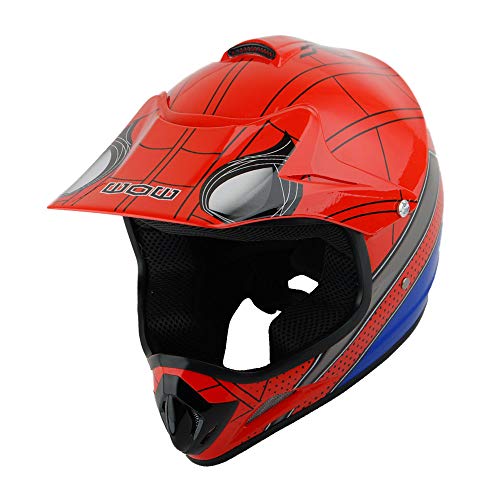
Best for Off-Road Adventures: WOW Youth Kids BMX MX Motocross ATV Dirt Bike Helmet
Best for Off-Road Adventures
A DOT-approved thermoplastic alloy shell with heavy interior cushioning handles bumpy trails and off-road rides a standard bike helmet can’t.
- DOT approval means it’s rated for impacts beyond what standard bike helmets are tested against
- Thermoplastic alloy shell holds up to the scrapes and knocks of dirt and trail riding
- Extra interior cushioning softens harder falls on uneven terrain
- Full-face coverage protects chin and jaw, not just the crown of the head
- Overkill and uncomfortably hot for everyday neighborhood sidewalk rides
- Bulkier and heavier on a toddler’s neck than a lightweight bike helmet
- Limited ventilation compared to helmets designed for casual riding
Best Fun Design: Raskullz Skelosaurus Toddler Helmet
Best Fun Design
A bendable 3D rubber mohawk and dinosaur-skeleton graphics turn helmet time into playtime, encouraging reluctant toddlers to wear it every ride.
- The bendable mohawk is genuinely the reason some toddlers stop fighting the helmet strap
- Skeleton-dinosaur theme stands out instantly in a parking lot full of plain helmets
- Lightweight shell doesn’t feel like a burden on a small neck
- 48-52 cm range covers most 3-to-5-year-old head sizes without a separate youth size
- The rubber mohawk spikes can snag on jacket hoods or get grabbed by siblings
- Runs narrower on safety certification detail than the Radio Flyer or Raskullz unicorn listing
- Novelty graphics mean this one won’t ‘grow up’ with an older kid’s taste
Best Value: Raskullz Kids' C-Preme Super Rainbow Corn Helmet
Best Value
CPSC-certified impact protection with a playful 3D unicorn design delivers real safety at a budget price point parents won’t hesitate on.
- CPSC-certified EPS foam delivers real impact protection, not just a cute shell
- Cheapest helmet on this list by a wide margin without cutting corners on core safety
- Cooling vent design keeps toddlers from overheating on warm-weather rides
- 3D unicorn horn and mane details make it an easy sell to reluctant toddlers
- One-size fit has less adjustment range than the Radio Flyer’s dial system
- Unicorn theme obviously won’t appeal to every toddler
- Lighter-duty shell than the Triple Eight or WOW for harder impacts
Side-by-side comparison
|
Best Overall
Radio Flyer Kids Helmet, for Kids 2-5 Years Old, R
|
Best Premium
Triple Eight Certified Sweatsaver Helmet for Skate
|
Best for Off-Road Adventures
WOW Youth Kids BMX MX Motocross ATV Dirt Bike Helm
|
Best Fun Design
Raskullz Skelosaurus Toddler Helmet 3+, Green/Blac
|
Best Value
Raskullz Kids' C-Preme Super Rainbow Corn Helmet,
|
|
|---|---|---|---|---|---|
|
|
|
|
|
|
|
| Recommended Age Range | 2-5 years | 3+ years (youth sizing) | 3-8 years | 3+ years | 2-4 years |
| Safety Certification | U.S. bicycle helmet safety standard | Certified multi-sport (skate/BMX/derby) | DOT-approved | Standard toddler-grade EPS foam | CPSC-certified |
| Fit Adjustment | Dial adjuster + independent chin strap | Swappable Sweatsaver pads | Strap adjustment, fixed shell | Strap adjustment, fixed shell | Strap adjustment, one size |
| Best Use Case | Everyday bikes, scooters, skateboards | Skate parks and rougher multi-sport use | Trails, dirt paths, off-road riding | Everyday riding, reluctant wearers | Everyday riding on a budget |
| Price | $39.97 | $55.00 | $49.95 | $31.99 | $20.99 |
| BUY NOW | BUY NOW | BUY NOW | BUY NOW | BUY NOW |
What to look for in Toddler Bike Helmets
Not all helmets sold for kids are actually certified to protect them. The sticker inside the shell matters more than anything on the box.
Toddler heads grow fast, and a helmet that’s too loose protects nothing in a fall. The best helmets have a real adjustment system, not just a one-size strap.
A heavy, stuffy helmet gets fought over every single ride. Lighter shells with real vent holes keep toddlers cooler and more willing to keep it on.
The safest helmet in the world does nothing sitting in the closet. Graphics, mohawks, and themed designs solve a compliance problem, not just a style one.
A sidewalk tumble and a trail wipeout are different impacts. Buying the wrong category of helmet either overprotects uncomfortably or underprotects dangerously.
At what age should a toddler start wearing a bike helmet?
As soon as they’re on anything with wheels — a balance bike, tricycle, or scooter — they should be in a properly fitted helmet, typically starting around age 1-2. Most toddler-specific helmets like the Radio Flyer are sized starting at age 2, which lines up with when most kids start riding.
How do I know if a toddler helmet fits correctly?
The helmet should sit level, about two finger-widths above the eyebrows, not tilted back. The chin strap should form a V under the ears and allow just one finger between strap and chin when buckled. If it rocks side to side or front to back when you shake your toddler’s head gently, it’s too big.
Do I need to replace a toddler helmet after a crash?
Yes, always. EPS foam compresses to absorb impact and doesn’t bounce back — even a helmet that looks fine after a fall may have already used up its protective capacity. Replace it after any real crash, not just visible cracks.
Can one helmet work for biking, scooters, and skateboarding?
Often yes, but check the certification. Helmets like the Radio Flyer and Triple Eight are explicitly rated for multiple activities including bikes, scooters, and skateboards. A dedicated motocross helmet like the WOW is built for off-road impacts and isn’t the right choice for everyday scooter riding.
The bottom line
- Radio Flyer Kids Helmet: the default pick — adjustable, certified, and built to cover ages 2 through 5 in one purchase.
- Triple Eight Certified Sweatsaver Helmet: upgrade here if your toddler is already skating or riding harder than casual pavement cruising.
- WOW Youth Kids BMX MX Motocross ATV Dirt Bike Helmet: the right call once sidewalks turn into actual trails.
- Raskullz Skelosaurus Toddler Helmet: buy this when the real obstacle is getting the helmet on at all.
- Raskullz Kids' C-Preme Super Rainbow Corn Helmet: certified protection at a price that makes a second or backup helmet realistic.
For most families, the Radio Flyer Kids Helmet is the one to buy first — it’s certified, adjustable, and built to last from age 2 through 5. If your toddler rides trails or you want skate-park grade protection, spend up on the WOW off-road helmet or the Triple Eight. If budget or getting a reluctant toddler to actually wear the thing is the bigger problem, the Raskullz unicorn or dinosaur designs solve that without skipping real certification.
Leave a Reply